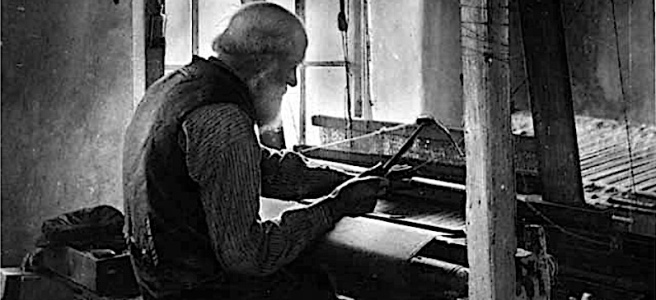
Silas Marner: the Weaver of Raveloe was George Eliot’s third novel, first published in 1861. This post comes with a heavy, heavy spoiler alert: I’m going to give away the entire plot.
Early in the 19th century, Silas Marner, a weaver, is framed for a theft that he did not commit. Expelled from the Calvinist congregation of which he is a member, and with his life shattered, he flees to a rural village where he is unknown. He lives isolated and alone, avoiding his neighbours and obsessively hoarding the gold coins that he earns from his weaving.
Catastrophe: the gold is stolen, leaving Silas bereft.
Meanwhile, at the big house, Squire Cass has two mysteries to ponder. One is the sudden disappearance of his younger, ne’er-do-well son, Dunstan. The other is the continuing failure of his elder son and heir, Godfrey, to propose to Nancy Lammeter, despite it seeming a natural and inevitable match.
The reason for Godfrey’s reluctance is that he is already secretly and disastrously married. Conveniently for him, however, on her way to demand money from him, his opium-addled wife Molly collapses and dies in a snowstorm.
By chance, her infant daughter wanders into Silas’s house. He sees the golden-haired child as a gift sent by God to compensate him for the loss of his gold; he adopts her and names her Eppie. She changes his life completely, and from being a lonely, distrusted outsider, he becomes integrated into the community.
Godfrey keeps quiet about his wife and daughter, and marries Nancy.
Sixteen years later, a quarry is drained and Dunstan’s skeleton is found—still clutching Silas’ stolen gold. Godfrey confesses to Nancy that Molly was his first wife and that Eppie is his child.
Which brings us to the novel’s crucial scene. Nancy is gracious enough to forgive Godfrey’s stupidity, and they agree to visit Silas and explain everything—on the assumption that Silas will recognise Godfrey’s prior rights and the advantages, to Eppie, of being raised as the daughter of a gentleman, rather than a poor weaver. They’ll waltz off with Eppie and all will be well.
It doesn’t go as planned. Silas won’t cooperate. Godfrey gets insistent. And when Eppie is asked to decide, she refuses, despite all that Godfrey has to offer.
Subsequently, she marries a local boy, Aaron, and happiness ensues:
‘Oh Father,’ said Eppie, ‘what a pretty home ours is! I think nobody could be happier than we are.’
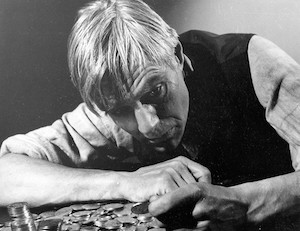
It’s a great plot. But the four major characters present a problem. The book is named for Silas, and we understand why he became an isolated, distrusted, obsessive hoarder; but he’s ‘on stage’ for relatively few pages. Specifically, the circumstances under which he was originally accused of theft and expelled from his church are only sketchily covered.
Godfrey is always unsympathetic. We don’t know why he—or Dunstan— is such a shit. His relationship with his father is problematic… but that’s again sketched in, rather than explored.
Both Nancy and Eppie are mere shadows. Nancy is really only there to prod Godfrey and speak the author’s lines for her. Eppie, grown up, is a sort of caricature of idealised, homely, proto-proletarian virtue.
And I’m not persuaded by her morally-determined decision to stay with Silas.
Why do I say that? Godfrey’s condescending treatment of her and Silas is abominable, and they are justified in resenting it. But at a certain level—not examined—Godfrey is right. Silas is 55, worn out by years of labour, and on a road to nowhere. Eppie’s husband-to-be is even more of a shadow than she is: why should we believe that she will be happy with Aaron? — except that Eliot is determined that she will be.
Silas Marner, I suspect, is one of those rare novels that should have been longer (unlike Middlemarch, which, although a masterpiece, is seriously overlong).
Specifically, we need to undergo Silas’s original expulsion from Paradise in real time, rather than as a brief flashback.
And I would be interested to learn more about the aftermath of Eppie’s decision to reject Godfrey. Sure, she’s ‘right’—at least in the terms that Eliot lays down—but is she wise? I can’t help thinking that Aaron might turn out a less than ideal husband, and that Eppie might end up regretting her decision not to accept Godfrey’s offer. Indeed, one of the reasons that Middlemarch is a better novel than Silas Marner is that it addresses the dreadful consequences of the sort of decision that Eppie finally makes.


