I’m not a big fan of plot twists. Mrs Bates turns out to be Norman in a wig. The Planet of the Apes turns out to have been Earth, all along. Darth Vader turns out to be Luke Skywalker’s old man. The central character in The Sixth Sense turns out to be a ghost who doesn’t know he’s dead.
So what?
Such twists are mere revelations—rabbits hauled out of a top hat. Very often they are simply a way of finishing a story with a flash and a bang, in a desperate attempt to persuade the viewer that there’s more going on than meets the eye.
(Or, as with The Usual Suspects, they simply invalidate everything that has gone before, rendering the entire exercise futile.)
There are, I think, more interesting story reversals that I used to refer to as ‘turns’, until my old chum Chris Bidmead offered a more satisfactory term: ‘folds’.
These are more complex and profound than simple twists. Rather than single events, these are sequences that cast new light upon a whole series of preceding events so that, like a strip of paper folded at an angle, the entire narrative is not gainsaid, but reconfigured… and projected in an entirely new direction.
The best example that I can think of is Wilkie Collins’ No Name, which kicks off with a plot fold so elegant, so beautifully crafted, that it induces—in me at least—an almost electric jolt of pleasure.
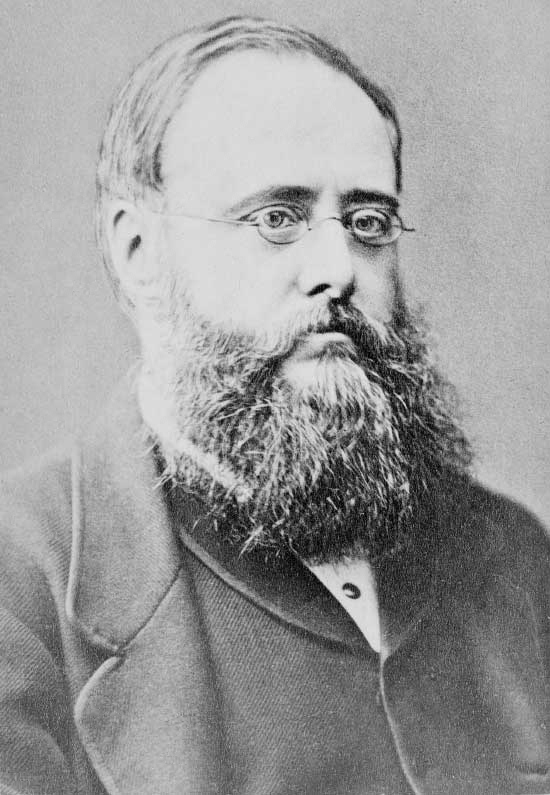
No Name was first published in 1862, as the follow-up to the best-selling The Woman in White (1860). It sold out completely on the first day of publication, and Collins was paid the enormous sum, for the time, of £3,000.
He was perhaps the greatest exponent of the Victorian ‘sensation novel’, a literary genre that set out to shock readers with socially transgressive subject matter—in the case of No Name, adultery, illegitimacy, women’s rights, impersonation…
It is 1846. Magdalen Vanstone is 18 years old, the beautiful, privileged daughter of wealthy parents. She has an elder sister, Norah, aged 26.
Out of nowhere, a letter arrives from America. Mr and Mrs Vanstone, visibly surprised and excited, announce their immediate departure to London on important family business, whose nature they do not reveal.
Shortly after their return, Mrs Vanstone discovers that she is pregnant. Given her age (44) and the fact that she was seriously ill after a previous miscarriage, her life is in danger.
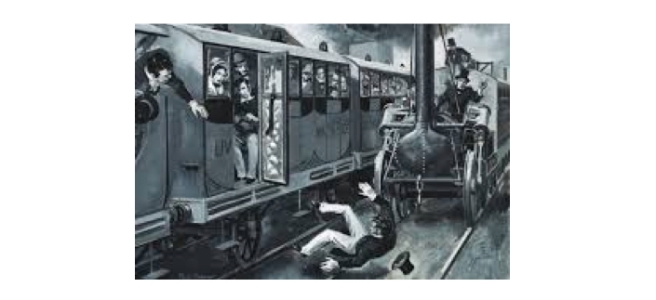
As the birth approaches, her husband is shaken by some secret revelation and summons his lawyer, Mr Pendril, at once, on a matter of the utmost importance. But before Pendril can respond, Mr Vanstone is killed in a railway accident. The shock sends his wife into labour.
Upon his arrival, Mr Pendril tells the doctor that he must be allowed to see Mrs Vanstone if there is even the slightest chance that she could sign her name to a document. But it’s too late. Mrs Vanstone dies in labour, and the child—a boy—survives her by only a few hours.
After the funeral, Mr. Pendril produces the will, under which half of Mr Vanstone’s fortune was to have been left to his wife, and the other half divided equally between Norah and Magdalen. He explains, however, that Norah and Magdalen are no longer provided for.
In his youth Andrew Vanstone made a disastrous marriage abroad. He left his wife, and arranged an allowance to her on condition she never came to England. That marriage remained a secret.
Norah and Magdalen’s future mother fell in love with him, fully aware of the story. Although they could not marry (the events of the novel precede the Matrimonial Causes Act of 1857, which introduced secular divorce), they lived together as man and wife. The unexpected letter from America announced the death of Andrew’s legal wife. He and the girls’ mother went straight up to London and got married.
Andrew was unaware, however, that the marriage invalidated his existing will. Pendril was abroad at the time, and unaware of this looming danger. By the time he returned, Andrew was dead.
So Andrew died intestate. Normally the estate would be divided according to a set rule: one third to his wife and the remainder split among his children. However, Norah and Magdalen are illegitimate, so they have no direct entitlement. Their only chance was if Mrs Vanstone could have signed a will of her own, leaving her third of the estate to her daughters. But she was too ill to do this.
In the few hours that it survived her, the baby inherited Andrew’s entire fortune. And, upon this legitimate offspring’s death, the estate passed to his next of kin: his paternal uncle, Michael Vanstone.
Inheriting the entire fortune, Michael refuses to provide for the two orphans, who find themselves turned out—with no name, no rights and no resources—into an alien, hostile world.
The remainder of the novel concerns Magdalen’s attempts to regain the fortune of which she has been so unjustly deprived. There is much to enjoy but, in the end, Collins seems to run out of constructive ideas and resorts to outrageous melodrama and coincidence to engineer a happy end. Nevertheless, that initial fold is like breaking off at snooker and clearing the table in one go: the balls fly around the table and drop smoothly into the pockets, always leaving the cue ball lined up for the next shot.
The featured image shows the first recorded railway death, that of William Huskisson MP in 1830.


